 日本語
日本語
 ENGLISH
 中文簡体語
中文簡体語
 中文繁体語
中文繁体語
 한국어
한국어


2026.05.03
Memories of Me and Kobe Newspaper Hall (1) - Mural of Mt.
NEWS
In honor of the 70th anniversary of the former Kobe Newspaper Hall, we received many submissions of memories. The essays were published in the Kobe Shimbun dated May 3. We will introduce the full text of the adopted memoirs in a series of five articles.
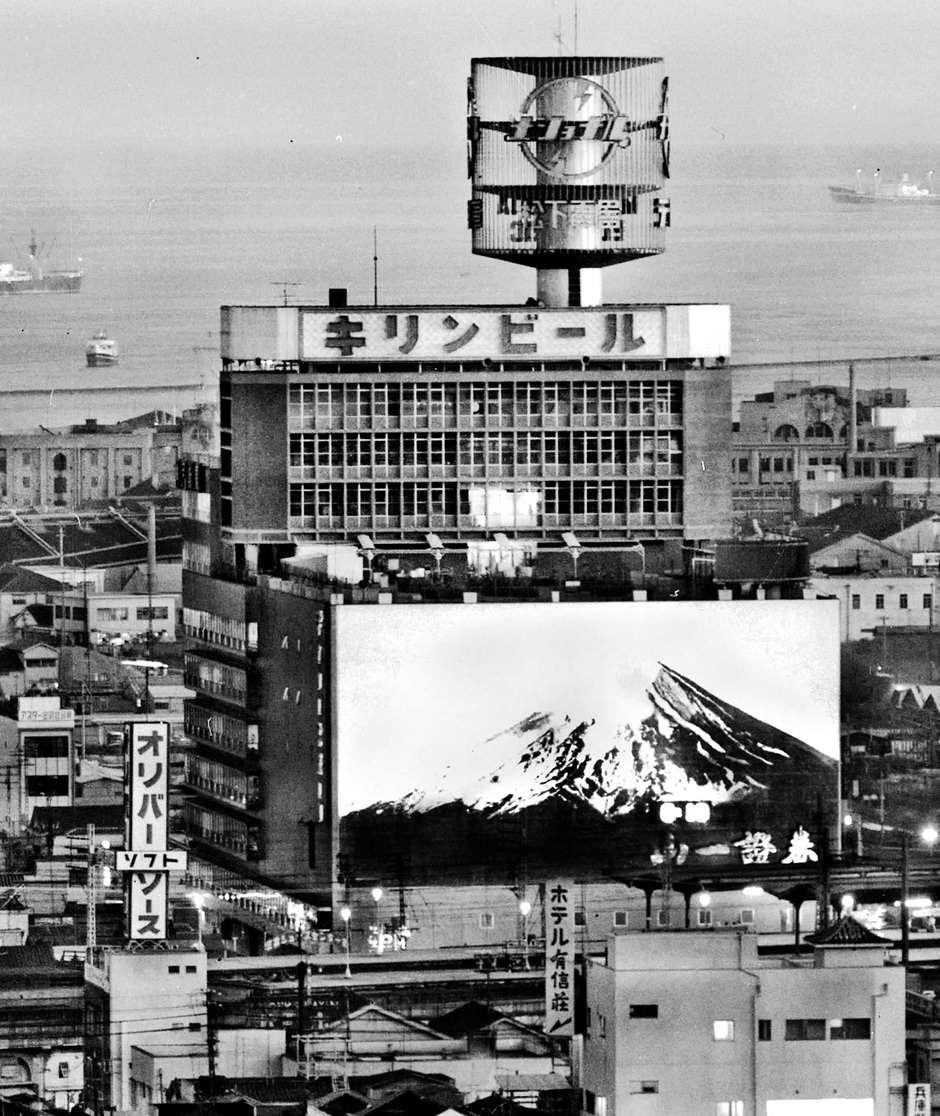
The symbol of Sannomiya as well as the Kobe Newspaper Hall is the mural of Mt. (1) is a memory associated with this mural. It was an impressive mural that gave citizens a sense of peace and relief.
Fuji mural.
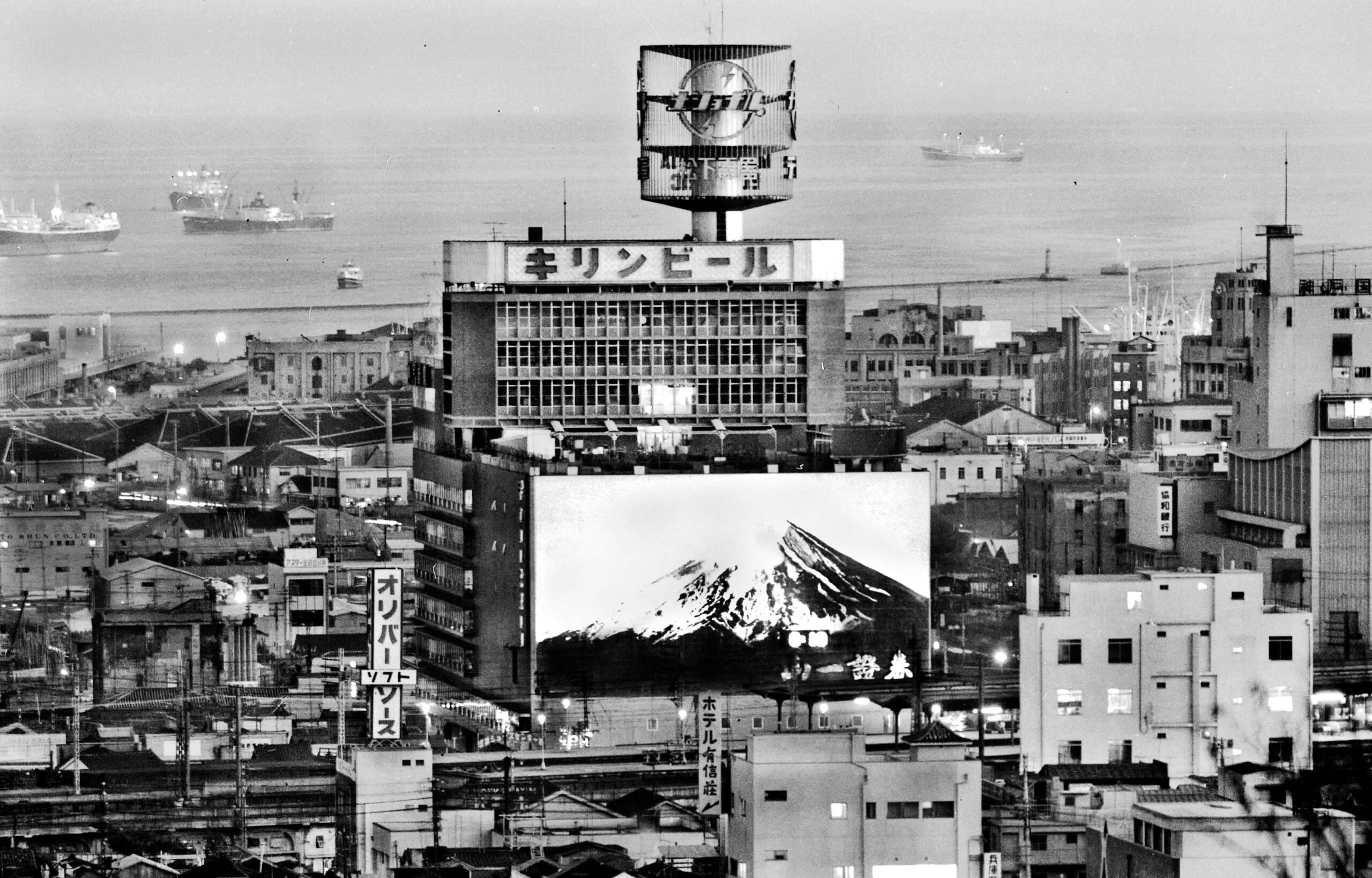
(Photo) Fuji mural can be seen from a distance and leaves a lasting impression on many people (1961), courtesy of the Kobe Shimbun.
Seeing the real Mt. Fuji reminds me of the Newspaper Hall mural.
Miyoko TASAKA (Akashi-city, age 75)
Before the earthquake, Sannomiya Station had a view of Mt. Fuji at the Newspaper Hall as I rode out on the train, and I realized, ah, I had returned to Kobe.
Fuji on a rare "outing" was a symbol of a special day in my childhood. When I later saw the real Mt. Fuji from the Shinkansen, its beautiful shape reminded me of the city of Kobe.
It is gratifying to know that what is left in our hearts and minds in later life is beautiful and enjoyable. Or perhaps there is nothing left behind that we don't want to leave behind.
My friend lost her mother in the earthquake. The Kobe I knew was destroyed, and Mt. However, the Kobe Shimbun was still published on that day and arrived at my home this morning. I hope that tomorrow and half a century from now, the same will be true.
The meeting place is "under the Mt. Fuji Mural."
Noriko Taya (Hyogo, age 80)
I was born and raised near JR Kobe station. When I commuted to school and work, I used the tram to get around, and I noticed that each of the main stations had its own recognizable scenery. Kobe station had the Minatogawa Shrine, Akashi station had the moat in front of the castle, and Himeji station had Himeji Castle at the end of Otemae-dori. And the best of all is Sannomiya Station. When I saw the large Mt. Fuji at the Kobe Newspaper Hall, I felt relieved to know that I had returned to Kobe, no matter where I came back from, east or west. Fuji" not only when getting on and off at the station, but also when I was a student or working at a company. The 1995 earthquake destroyed the old building.
Fuji in the mural, forever in my heart.
Naoko NIIE (Tamba-Sasayama, age 87)
It has been about 50 years since I saw a picture of the Kobe Newspaper Hall and I have known it for about 50 years, but it is a building I will never forget. When I visited Kobe for the first time, I saw a large building with a huge mural "Mt. I was surprised. I had never seen Mt. Fuji before, so I was surprised to see such a beautiful mountain. After that, when I went to Kobe, I saw it, so I used it as a guide and went from place to place. Even today, when I visit Kobe, the building has changed and is now called Mint Kobe, but I still have the old Mt. I was reassured by the Kobe Shimbun Kaikan, even though I had my sights set on it back then. Somehow the memories of my youth are still embedded in my mind even in my old age. It's fine the way it is now, but I feel a little sad.
Kobe Citizen's Nose High Quiz" using a mural of Mt.
Toshiko Saito (Suma, age 80)
Which national railroad station has the best view of Mt. Fuji to the south?"
Yamaichi Securities' advertising mural was a bit "snarky" for us Kobe citizens. quiz" for us Kobe citizens. In my younger days, I was fortunate enough to work at the Kobe Shimbun Marketing Center, where I held meetings for Wonderful Kobe at the 8th floor Kinryukaku and sorted through ads clipped from newspapers all over the country. Even now, clipping newspapers is a fun part of my daily routine, and I also met some of my mentors in the library on the 9th floor. Sannomiya Station of the Japan National Railways, seen from my office window, and the Shioji Limited Express. I used to yearn to take a trip on it someday. When Sanchika was established, I played amidakuji with my colleagues. We went out for shopping at the store.
Congratulations on 70 years of a newspaper hall full of memories.
Sada Masashi also talks about the Mt. Fuji mural
Nagahide OCHI (Tarumi Ward, age 65)
Masashi Sada said at a concert. When he was traveling between Tokyo and Nagasaki by night train, he saw a mural of Mt! He said he thought, "I am almost there!
The beauty of the mural illuminated by the setting sun is outstanding.
Akihiro Hataya (Nagata, age 91)
The Kobe Shimbun Kaikan, a temple of culture, has appeared right in front of Sannomiya Station of the Japan National Railways, the main entrance to the humble city of Kobe, with a huge mural of Mt. Fuji, which I had seen more than 800 times over the past four years from the windows of the Hankyu train on my way to and from university. Mt. Fuji, like the cherry blossoms, is a special mountain for Japanese people. Fuji changes its appearance depending on weather conditions. Fuji is said to be Okada Koyo's masterpiece, especially when it is crowned with snow. The nighttime illumination of the mountain is good, but the moment when the changing light of the setting sun is admired is outstanding.
I joined your company in April 1958 with a long-cherished dream. I am grateful.
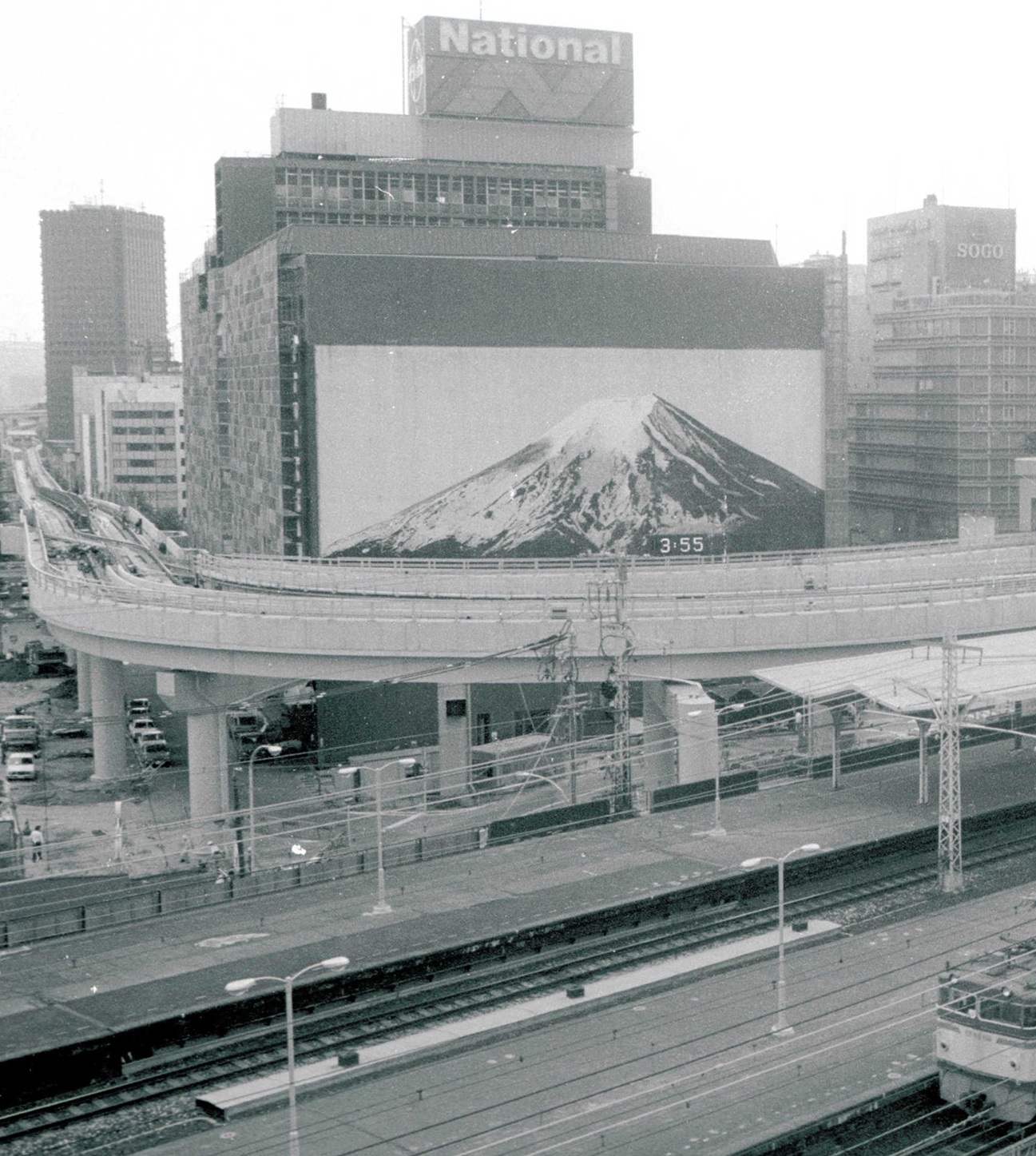
(Photo) Mural of Mt. Fuji after the Portliner opened (1981) courtesy of the Kobe Shimbun
(2)(temporal or logical sense) follow ...