 日本語
日本語
 ENGLISH
 中文簡体語
中文簡体語
 中文繁体語
中文繁体語
 한국어
한국어


2026.05.03
Memories of Me and Kobe Shimbun Kaikan (4) - Scenes from the Workplace
NEWS
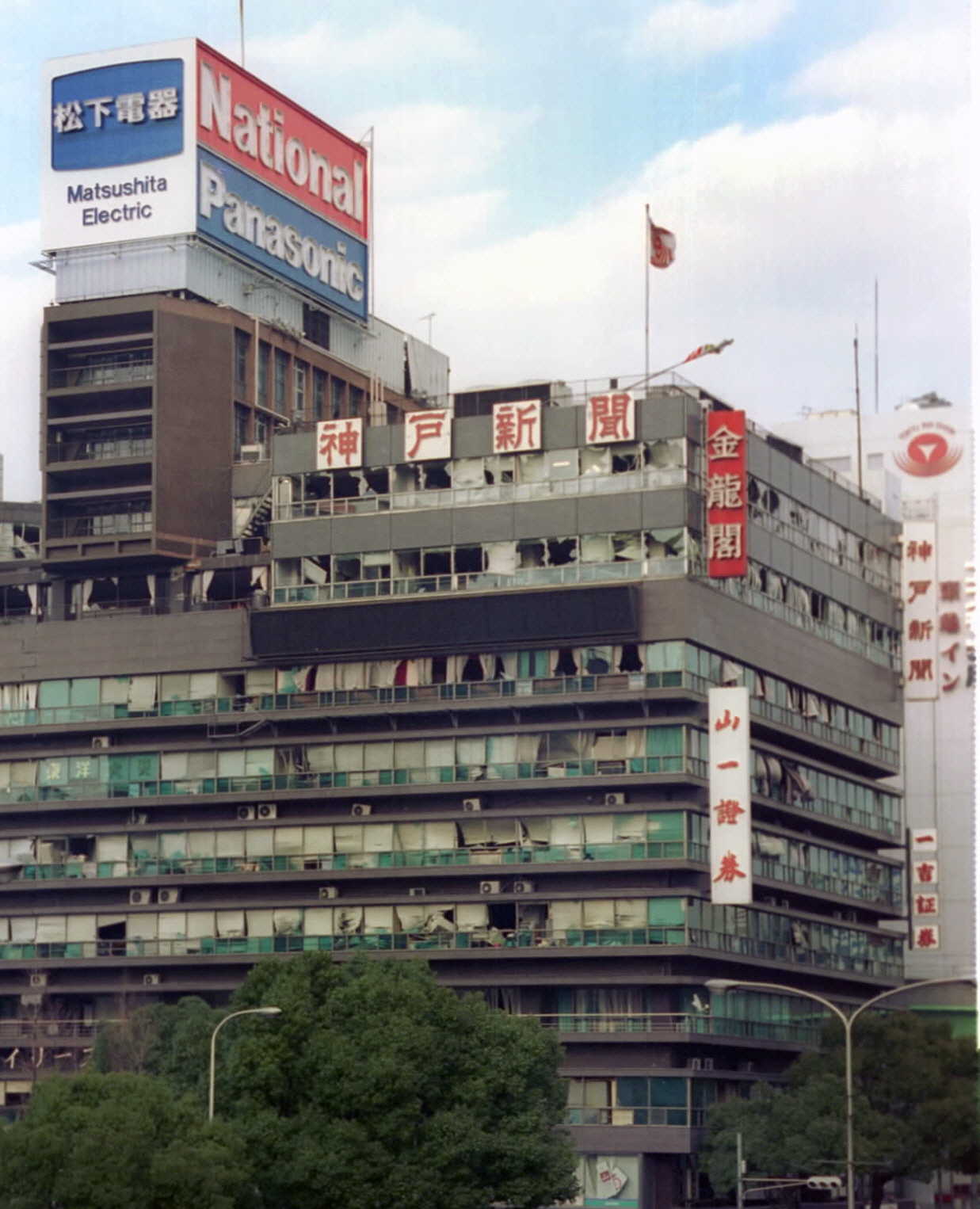
The Kobe Shimbun Kaikan was also the headquarters of the newspaper company, and before computerization, it was filled with the enthusiasm of artisanal newspaper production. The building welcomed a wide range of visitors. It also housed about 60 tenants of various sizes. However, on January 17, 1995, the building was completely destroyed in the Great Hanshin-Awaji Earthquake. After overcoming many hardships, the Kobe Shimbun Kaikan had its grand opening as Mint Kobe on October 4, 2006.
[Craftsmanship in making newspapers]
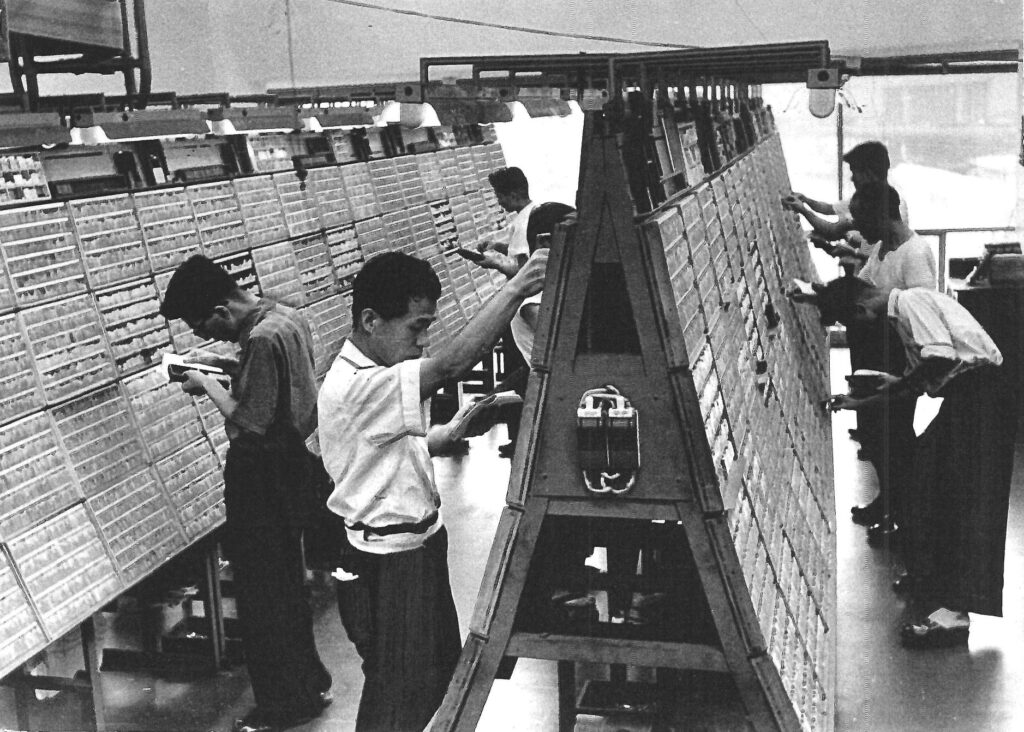
(Photo) The process of collecting type lined up on the shelves one by one according to the manuscript and called "kogumi" (1958) courtesy of the Kobe Shimbun.
Lively, noisy, amazingly short work time
Shinya Kumagai (Suma, age 78)
I joined the Kobe Shimbun in April 1971 and began my apprenticeship as an editorial reporter. To be honest, I do not have many memories of the newspaper hall itself, as I was so occupied with learning the job, but I do vividly remember the newspaper production process that was taking place inside the hall at the time.
On the second floor of the editorial bureau, a scary desk clerk was stationed, staring at the submitted manuscript paper (15 characters per line in those days) and erasing unnecessary parts from the paper with a brush full of ink. The paper was immediately surrounded by a pile of crumpled paper. He picked up the finished paper and handed it to the puncher, estimating that it was roughly 40 lines long. Although not an editorial writer, some of the editorial board members wrote very peculiar characters that looked like worms crawling on the paper, and there was an employee assigned to read them. I saw this during a review training session.
The workspace, which was about 20 meters square, was filled with employees in thick blue aprons, bustling with activity and noise. Suddenly, a loud voice comes from one corner of the room. It seemed to be saying, "Hey, Zhu Yan, give me the letter 0. Zhu Yan" was an employee who was in charge of selecting the typeface. I could not hear what he was saying, but it seemed that he was specifying the correct type size and font. The reply came from far away, "Yosay!" and the desired type was pulled out with tweezers and instantly replaced with the incorrect type. It is still a mystery to this day how they were able to hear the correct type in the midst of all that commotion.
Newspapers combined these craftsmanship skills, edited in a short period of time, and printed a paper that smelled of ink. That was half a century ago.
Company tours in the Newspaper Department, greatly improving editorial skills.
Sadayuki Tsuri (Ako, age 78)
It was July of 1962. I was in the third grade of junior high school at the time. The advisor of the newspaper club I belonged to led a group of six classmates to the Kobe Newspaper Hall for a visit to the Kobe Shimbun.
At the Kobe Shimbun, we were first briefed about the newspaper company. After that, we were guided through the order in which newspapers are produced. Next, 40 to 50 characters per minute are picked up at the text selection plant, where they are then assembled into small sheets. The small types are then made into a paper pattern for one newspaper page using a circular press. I was very surprised to hear that 200,000 copies of a 4×4 newspaper can be printed in an hour.
The editorial staff also instructed us on the 5W1H's and how to write articles, which were very important for writing articles, and this was very helpful for our later editing of our school newspaper.
We then began editing the summer vacation issue and managed to publish it at the end of the first semester. I still have the newspaper from that time in a safe place. The visit to the Kobe Shimbun and our efforts to edit the summer issue are still unforgettable memories for me.
However, what was very disappointing was when I saw the Kobe Newspaper Hall collapsed in the Great Hanshin-Awaji Earthquake that occurred in January 1995. It was a great shock and I felt as if our good memories had been shattered.
Newspaper production tour in elementary school, amazed at how fast they pick up the print.
Hisao FUJIMURA (Akashi, age 80)
I was born in 1945 and I remember going on a field trip when I was in the sixth grade. We saw the process of newspaper production one after another. First, the craftsmen were looking at the manuscripts and picking up and incorporating the type at great speed. Next, a provisional printing was done to check for typographical errors, and when it was OK, the paper was printed, but the large rolls of paper were being rotated and printed at an incredible speed. It is good to have those experiences from childhood that are still fresh in our memories.
After that, I got a job at a company on Kasuganomichi, where I often went to the underground Shumi-gai for drinks after work and to the beer garden on the rooftop. On the north wall of the building, there was a picture of Mt. Fuji and the name Yamaichi Securities written on it, and when I came back from a trip and saw it, I felt that I had come back to Kobe.
Father who continued to love his job of typesetting editions and newspapers.
Keiko KONISHI (Suma, age 59)
My father, Jojiro Ota, 91, worked at the Kobe Shimbun for a long time. When I found the black-and-white photo of the newspaper office, I fondly remembered visiting my father's office with my mother when I was a child. My father worked in a place called the typesetting section. The job was to pick up type based on the manuscript and assemble the plates while adjusting the spacing between lines and margins. Nowadays, digital typesetting is the mainstream, and I feel that times have changed.
My father worked a lot of night shifts to produce newspapers and came home late every day, so he did not have much time to spend with his children when they were little. When he was able to have dinner with his daughters occasionally, he would say to me, "Daddy, come again. He was strict about sentence paragraphs, the use of Kanji characters, and the way sentences were arranged. I remember that when I showed him my compositions in elementary school, he would check them in various ways, such as "drop one character after a paragraph.
My father, who worked for a newspaper company, is 92 years old this year. He loved reading the Kobe Shimbun long after his retirement and looked at the entire paper every morning. He was so happy when his grandson, whom he loved very much, won an award at the high school athletic meet and was featured in the Kobe Shimbun, that he called me at home.
Congratulations on the 70th anniversary of Kobe Shimbun Kaikan, and on the occasion of the 70th anniversary, I too was able to recall my childhood days with fond memories. I wish you continued success and development.
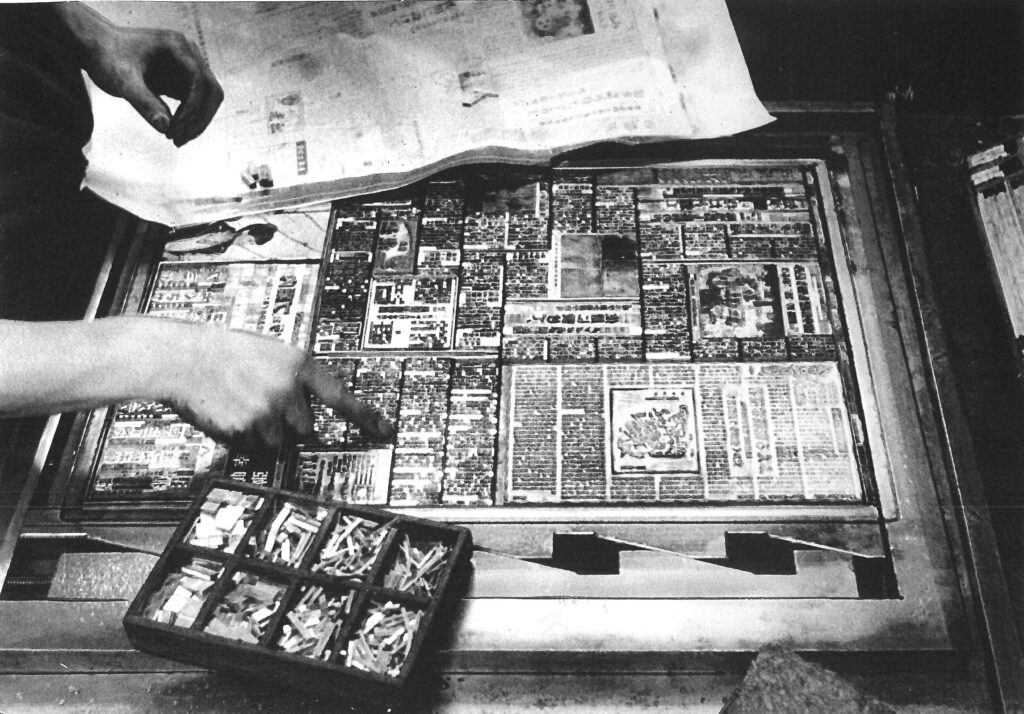
(Photo) The assembled "small groups" were collected and photographs were placed to make the original board for one page. The "large group" was called the "large group" (1961).
Workplace
Scared by the aftershocks, the company's documents were taken out of the building.
Mizue YAMAMOTO (Kakogawa, 50s)
My place of employment was tenant occupied. When I opened the balcony door for morning ventilation, the scene in front of Sannomiya Station before it became bustling and the sounds of the city beginning to move jumped out at me. I went to Printemps and Sogo through the underground Shumi-gai.
In my twenties, I enjoyed Sannomiya. But about two years later, the earthquake struck. My home outside the city was not damaged, and in January I carried my documents off construction scaffolding amidst worries about aftershocks. A few months later, a barbershop opened in a vacant store and house near my home. The owner looked familiar, with his long hair tied back in a single bun. It was the same person I had seen in the barbershop in the basement. At the time, I was getting a Japanese-style collar shave before my wedding, and my husband was also going there until the store closed. When I passed by the store, the pre-disaster interior of the building came back to my mind, and I fondly remembered the people at work and the casual days.
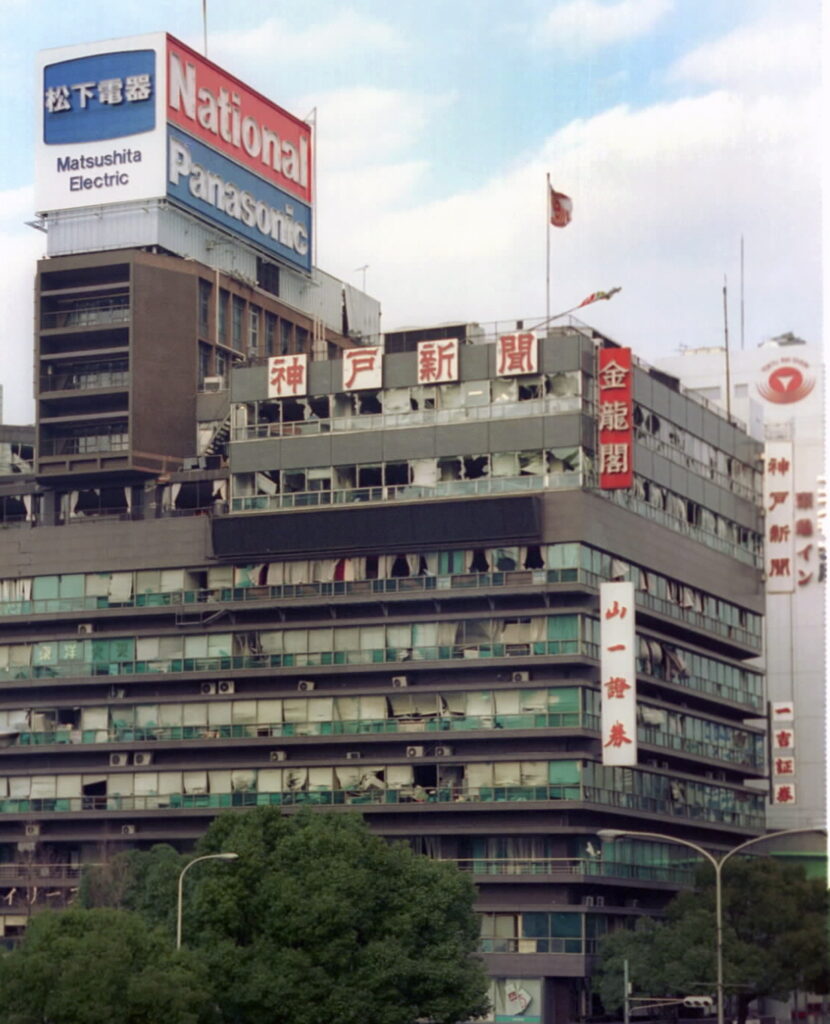 (Photo) Former Kobe Shimbun Kaikan immediately after the earthquake. It was judged to be completely destroyed and the decision was made to withdraw from the building on the same day (1995), courtesy of the Kobe Shimbun.
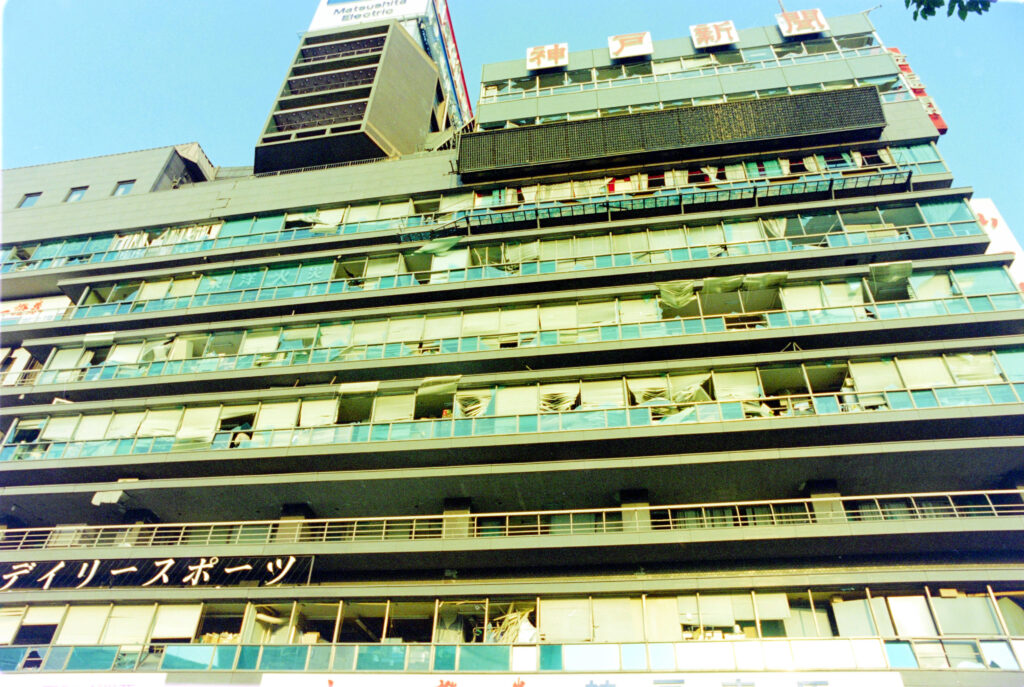 (Photo) Almost all the glass windows were broken and fell (1995) Courtesy of Kobe Shimbun
Receipt Failure at a Coffee Shop Job
M.M. (Higashinada, age 53)
My memories are of my part-time job at the coffee shop on the first floor when I was in high school. I have many memories of the busy shop, which was packed before and after movies, and the sight of newspaper people coming in in the morning for morning breakfast. I was a naive high school student, and I was taught that "receipts should never be written in this way.
Looking back now, I am so embarrassed that my face is on fire, but I am grateful that I learned something. I hope the employee from that time is doing well.
Dreams cut short during entrance exams and executive interviews
Rie KOJIMA (Nishi Ward, age 64)
The Kobe Shimbun Kaikan was a rugged building. It was a stately, long, horizontal building that resembled a cross-legged father thundering across the room in the Showa period, and the logo of the Kobe Shimbun added even more dignity to the building's presence. Forty years ago, as a university student, I gazed at the building from the pedestrian bridge in front of Sogo with awe and admiration.
As a university student, I took the employment examination for the editorial department of the Kobe Shimbun, passing the first round of the departmental examination and the second round of the editorial department examination. However, my dream was cut short at the third round of interviews for executive positions.
Forty years later, I am retiring completely this year from a career unrelated to newspaper journalism. Was this the right thing to do? No, it was for the best. The building I once admired is gone. The longing, bitterness, and regrets have all been sublimated (digested) into the person I am today.
A page from my youth, enjoying lunch with colleagues
Yumiko Ota (Nishi Ward, age 71)
Fuji mural. Fuji on the JR train wherever I went when I was a child, I felt relieved that I had returned to Kobe.
In 1973, I was hired by that hall as a new graduate. The five women quickly became good friends, and we would peek in on movies while eating our lunch break through a gap in the changing room of the 5th floor office. We looked forward to having lunch once a week at the coffee shop on the first floor. I wonder how they are doing now. I hope I can meet them through this paper!
Even today, we still talk about the old days at the Newspaper Hall, not at Mint Kobe. It is a page from my youth.
(5)(temporal or logical sense) follow ...